

Kuvaus
Tuotenumero: 1063
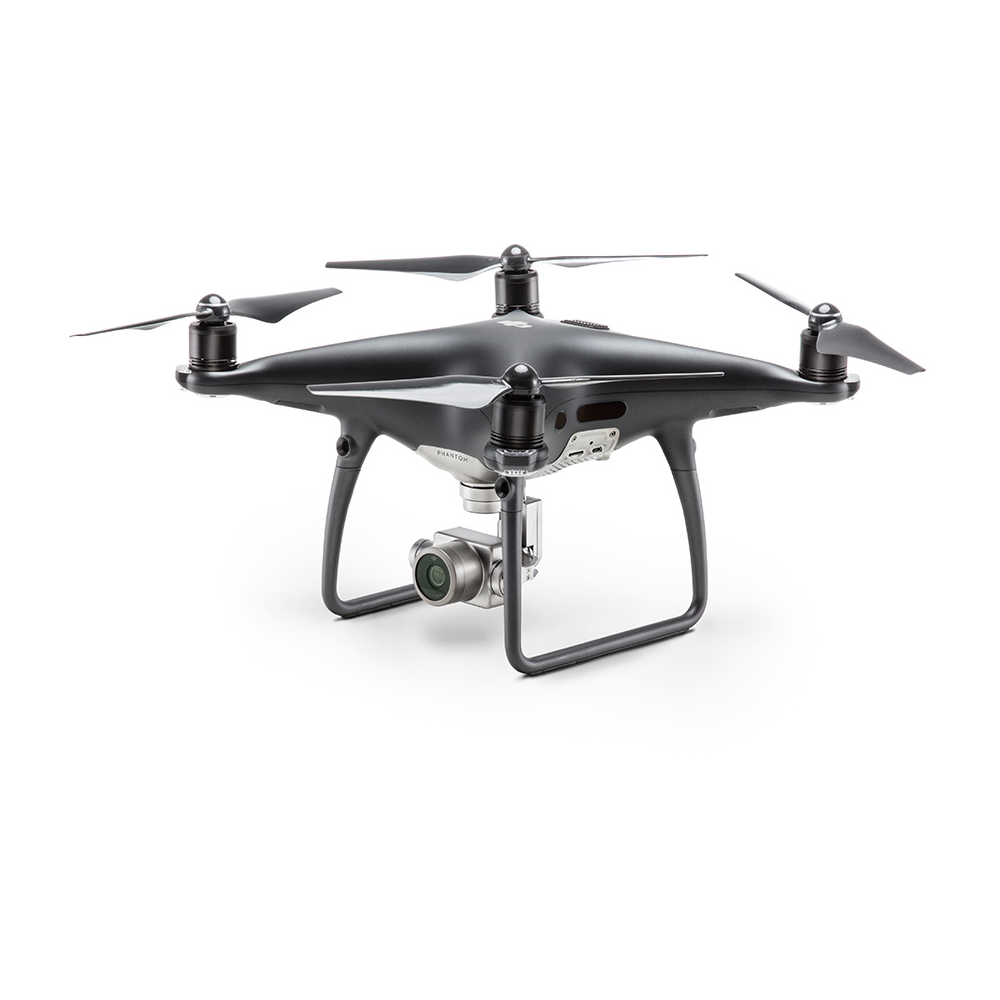
Phantom 4 Pro Obsidian edition
Features
Production optimized 4K
An enhanced video processing system allows video to be captured in cinema and production optimized DCI 4K/60 (4096 x 2160/60fps) at a bitrate of 100Mbps, enabling you to get high-resolution slow motion shots. The Phantom 4 Pro also supports the H.265 video codec (Maximum resolution 4096X2160/30fps). For a given bitrate, H.265 doubles the amount of image processing as H.264, resulting in significantly enhanced image quality. Record in the high dynamic range D-log mode to make the most of this image data for colour grading.
High resolution lens
The resolution and contrast of a lens is critical to image quality, because only a quality lens can capture sharp, vivid photos at high resolutions. The brand new Phantom 4 Pro camera has an aerial optimized F2.8 wide-angle lens with a 24mm equivalent focal length. It features eight elements – 2 aspherical – arranged in seven groups that fit into a smaller, more compact frame. Its images are consistently detailed with low distortion and low dispersion, ensuring that photos and videos are sharp and vivid. For the first time ever with a DJI camera, MTF (Modulation Transfer Function) results for this camera have been made public, so people can get a better understanding of lens performance.
Capture Every Moment
Aerial imaging is not only used to capture landscapes; it brings new perspectives to everything from action scenes to motor racing. Capturing objects moving at high speed has always been a challenge for flying cameras using an electronic shutter. This is why the Phantom 4 Pro is the first DJI Phantom to use a mechanical shutter and a large aperture prime lens. A max mechanical shutter speed of 1/2000 seconds eliminates motion blur and jello effect caused by shooting a fast moving object with a rolling electronic shutter. The electronic shutter has also been improved with a max shutter speed of 1/8000 seconds, and a new Burst Mode shoot capable of shooting 14 fps at 20 megapixels to catch the perfect moment.
Five-Directions of Obstacle Sensing
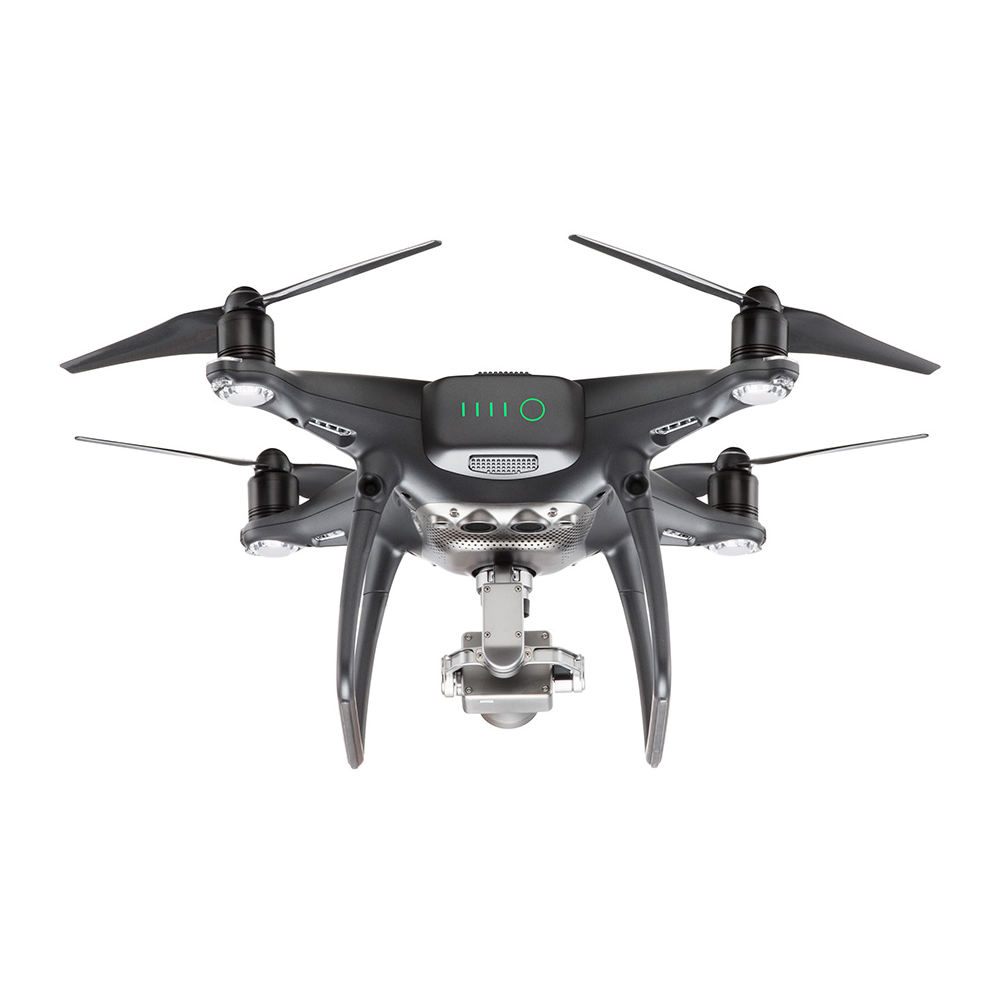
Flight Autonomy is expanded with an additional set of high-resolution stereo vision sensors placed at the rear in addition to the pair placed at the front as well as infrared sensing systems placed on the left and right sides. This network creates a total of five-directions of obstacle sensing and four-directions of obstacle avoidance, protecting the Phantom 4 Pro from more obstacles and giving filmmakers the confidence to capture more complex images.
Six-camera navigation system
Three sets of dual vision sensors form a six-camera navigation system that works constantly to calculate the relative speed and distance between the aircraft and an object. Using this network of forward, rearward and downward vision sensors, the Phantom 4 Pro is able to hover precisely in places without GPS when taking off indoors, or on balconies, or even when flying through windows with minimal pilot control. In the unlikely event that front and downward sensors are unable to operate, the aircraft can still hover in place using the rear stereo vision system. The Phantom 4 Pro also is able to fly in complex environments at a flight speed of up to 31mph (50kph) while avoiding obstacles in its path. It will automatically adjust its obstacle detection method in line with its flight speed, allowing it to avoid obstacles at high and low speed.
Included:
- 1x Aircraft Body
- 1x Remote Controller
- 1x Propellers Pair
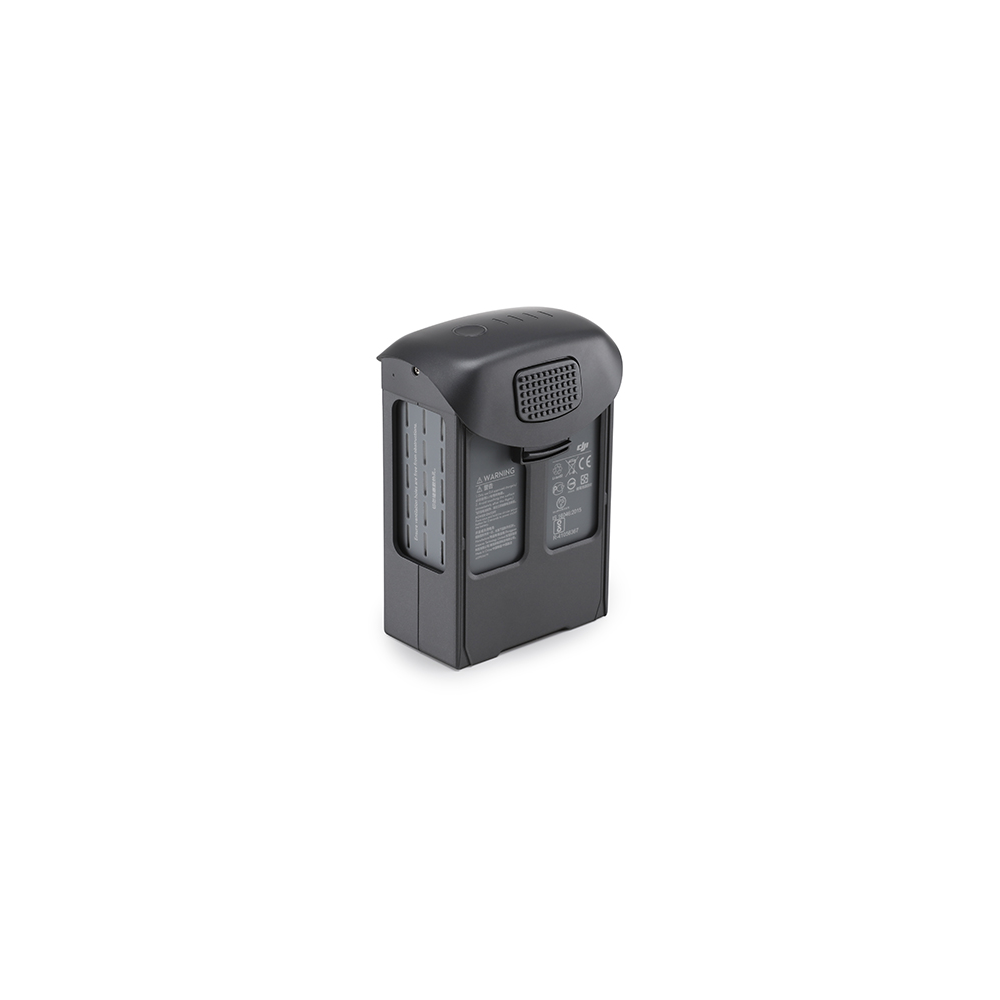
- 1x Intelligent Flight Battery
- 1x Battery Charger
- 1x Power Cable
- 1x Micro SD Card (16GB)
- 1x USB OTG Cable
- 1x Micor USB Cable
- 1x Gimbal Clamp
- 1x Carrying Case
- 1x Manuals