
B&W Outdoor Cases BW Outdoor Battery.case 908.16. Transport & Storage of defective lithium batteries, black
- VAT free purchase available at checkout.
- BrandBW
Description
Article no.: 24600
B&W Outdoor Battery.case P908.16 – Transport & Storage of Defective Lithium Batteries, Black
Store and transport lithium-ion batteries safely with the B&W battery.case P908.16. This case is officially approved for both intact and defective lithium batteries according to transport regulations P903 and P908. It suits batteries from devices such as e-bikes, drones or cordless screwdrivers, and it is designed for secure short- and long-term storage as well as transport on public roads.
Certified protection and real-world testing
The battery.case P908.16 is tested and approved as hazardous goods packaging under ADR P908 and meets UN packaging specifications 3480/3481. During certified tests with real, burning and exploding bicycle batteries, no flames escaped and the outer shell remained below 100°C. Therefore, the case is suitable for transporting intact and defective lithium batteries on public roads when used according to the specified regulations and instructions.
Recommendations for handling defective lithium batteries
Follow these handling recommendations to reduce risk during storage and transport. The case integrates passive safety features and should be used together with the included accessories and the prescribed procedures.
- Unique safety system closes automatically in the event of a fire inside - registered with the German Patent and Trade Mark Office
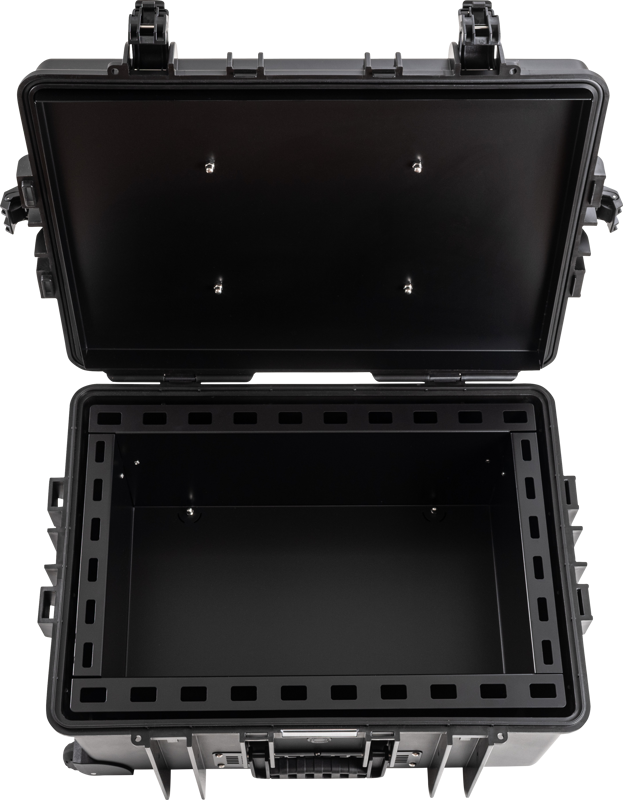
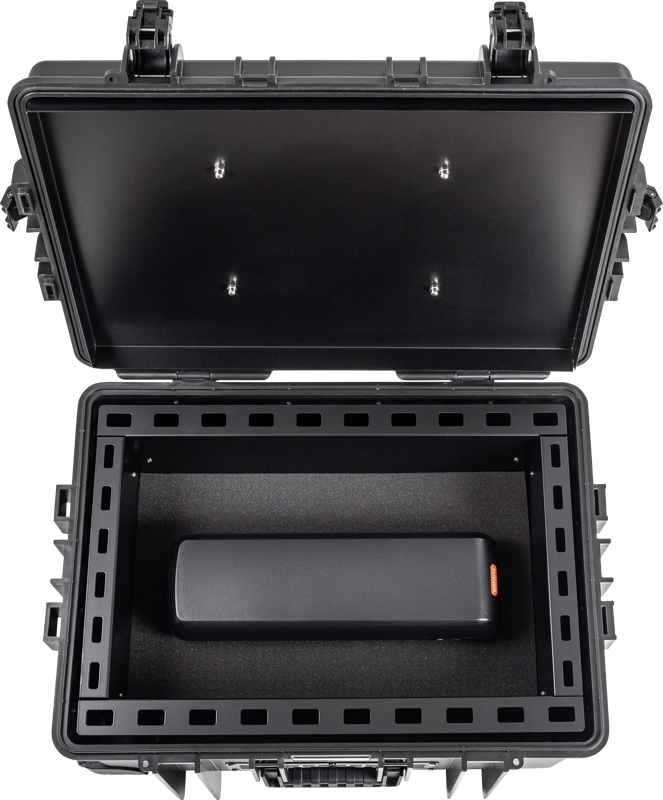
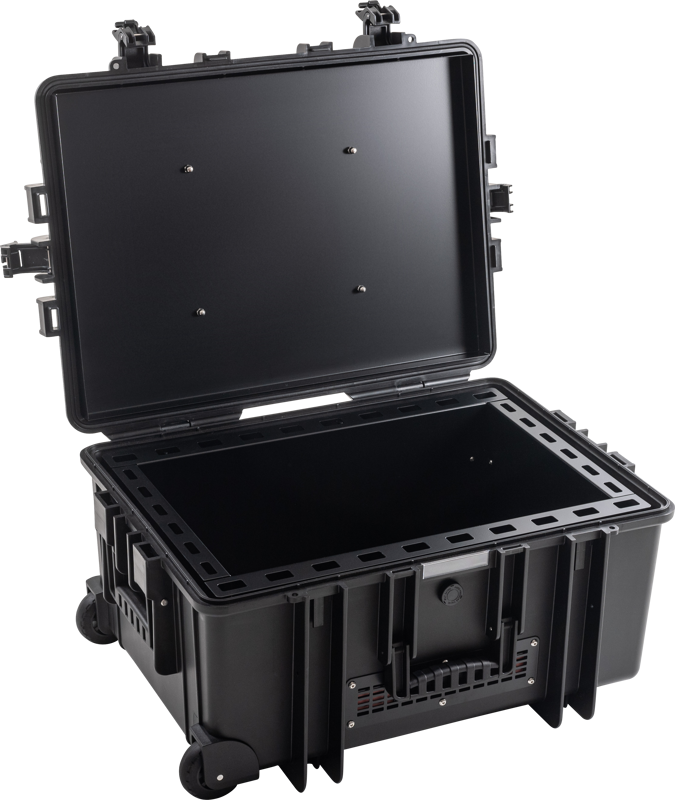
- High-quality plastic case with internal metal container
- The active carbon filter reduces escaping gases and reduces the formation of soot in the event of a battery fire
- Tested and approved as hazardous goods packaging in accordance with ADR P908 and therefore suitable for the transportation of intact and defective lithium batteries on public roads
- Conforms to the strict requirements of UN packaging specifications 3480/3481
- Tested under real conditions: No flames escaped from the battery fire during the tests and the outer shell of the B&W battery.cases 908 remained constantly below 100°C
P903 – Transport and storage of intact lithium batteries and accumulators
When you store or transport intact lithium batteries, follow these application instructions to ensure safe handling and compliance with P903.
- Application instructions: Use the foam to protect the battery; adapt the foam to the battery.
- Fire bags do not have to be used; protect batteries from short circuits; if necessary, follow further specifications and detailed operating instructions
P908 – Transport and storage of defective lithium batteries and accumulators
P908 covers defective batteries and specific symptoms that indicate a battery should be treated as defective. Use the case together with the prescribed application instructions when handling such batteries.
- Battery declared defective for safety reasons
- Deformed or inflated battery
- Degassed cell or battery Burnt out cell or battery
- Melted plastic parts or connections on the battery
- Strange gas smell detectable
- BMS (if present) identifies defective cells Damaged casing
Application instructions for defective batteries
Use these steps to prepare defective batteries for storage or road transport in accordance with P908.
- Use of the fire protection bags; place each defective battery in a bag; if necessary, repholster with foam against movement and secure; protect batteries against short-circuits; if necessary, follow further specifications and detailed operating instructions
- Defective batteries are not permitted for transport by international sea or air freight!
- Batteries declared as intact can be transported by international sea or air freight, subject to further requirements. Please note that batteries with more than 100 Wh may not be transported in passenger aircraft, but only in cargo aircraft and that the charge level may not exceed 30% at any time.
Product information: battery.case P908.16
The B&W battery.case P908.16 combines a robust outer shell with an internal metal container to offer safe storage and straightforward transport of both intact and defective lithium batteries. The case is user-friendly and built for repeated handling; it is tested and approved as hazardous goods packaging and therefore suitable for road transport of relevant batteries when used according to the stated regulations. The case supports a maximum payload of 16 kg.
For devices that are not used for extended periods—such as e-bikes, drones or cordless tools—safe battery storage reduces the risk of incidents. The P908.16 is officially approved for both transport and storage under P903 and P908, making it a practical option for workshop, event or field use where battery condition may vary.
Key product advantages and included items
In addition to its certified safety features, the battery.case P908.16 includes practical design elements for day-to-day handling and secure containment of batteries and their vapours.
- Safe storage and transport of lithium batteries
- The ideal solution for the safe storage and transport of intact and defective lithium batteries.
- Robust and easy to use thanks to the internal protective metal compartment.
- Unique safety system which closes automatically in the event of internal fire - registered with the German Patent and Trademark Office
- High quality plastic casing with internal metal container
- Active carbon filter reduces escaping gases and minimises soot formation in the event of a battery fire
- Tested and approved as hazardous goods packaging, suitable for transporting intact and defective lithium batteries on public roads
- Tested in real conditions: No flames escaped from the battery fire during the tests and the outer shells of the B&W battery.cases 908 remained below 100°C at all times
Design details and handling features
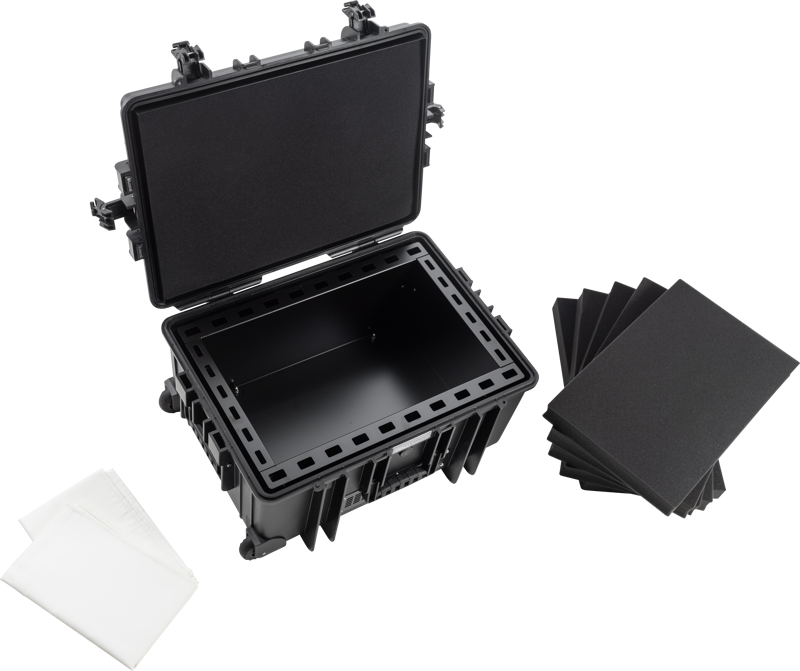
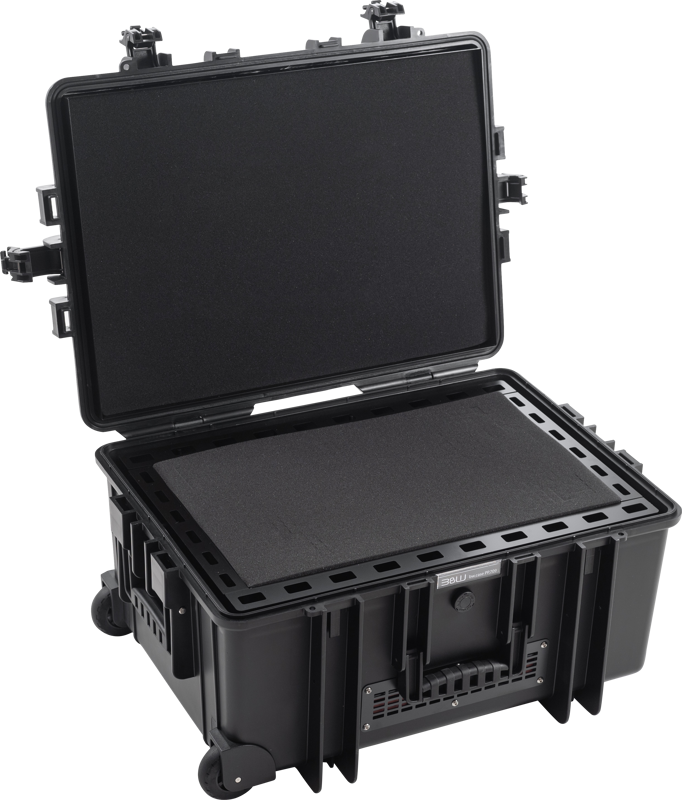
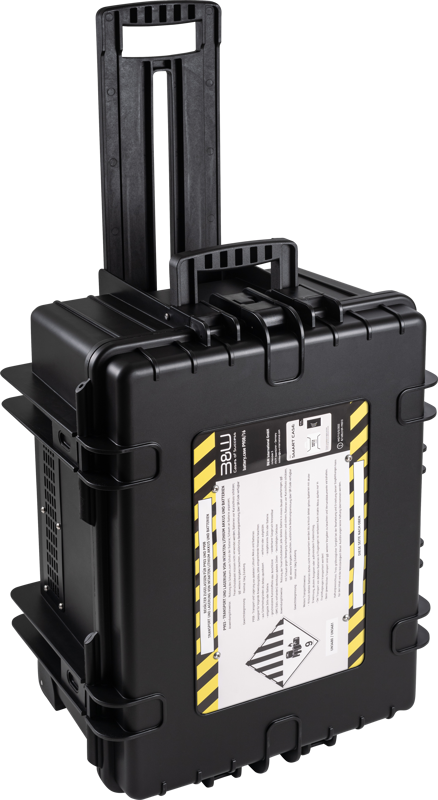
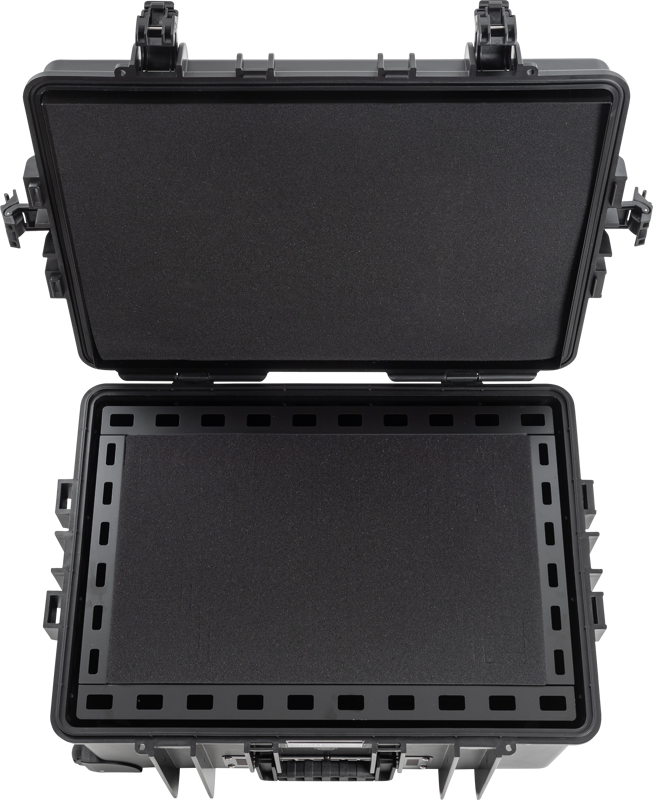
The case contains pre-punched cube foam that you can adapt to the shape of each battery, securing items against movement during transport. A fireproof protective bag provides an extra layer of protection for defective Li-ion batteries during storage or charging. For transport convenience, the case includes a comfortable trolley handle and smooth-running outdoor castors.
Supplementary product description
B&W develops customised, reliable products with an emphasis on quality and user needs. Their cases and bags aim to be practical transport solutions designed for frequent use and long-term reliability, reflecting the brand’s focus on careful design and production standards.
Features
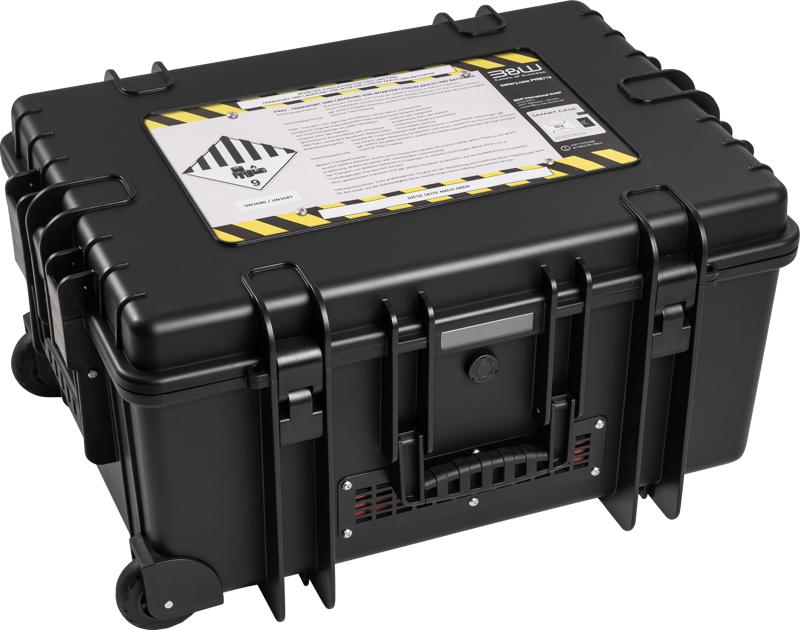
- Extremely sturdy case: polypropylene (PP) housing
- Approved for the transport and storage of intact and defective lithium batteries in accordance with transport regulations P903 and P908
- Stackable
- Two eyelets for padlocks (Ø 7 mm)
- Rubberised carrying handle
- trolley handle
- two smooth-running outdoor castors
- activated charcoal filter
- Pre-cut cube foam
- Foam lid
- Two fireproof protective bags (40 x 60 cm)
Dimensions and weights
| Specification | Value |
|---|---|
| External dimensions | 610 x 430 x 265 mm |
| Loading space | 500 x 314 x 243 mm |
| Weight without shipping packaging | 18.2 kg |
| Maximum payload | 16 kg |
Frequently asked questions
Question: Can I transport defective lithium batteries by air or sea?
Answer: No. Defective batteries are not permitted for transport by international sea or air freight. Use the battery.case P908.16 for road transport according to P908 regulations and follow the listed application instructions.
Question: What should I do with intact batteries destined for international transport?
Answer: Intact batteries can be transported by international sea or air freight only if you meet further requirements. Note that batteries over 100 Wh cannot be carried in passenger aircraft and must travel on cargo aircraft. Also, the charge level may not exceed 30% at any time.
Question: How do I secure batteries inside the case?
Answer: Use the pre-cut cube foam to adapt and stabilise each battery. For intact batteries under P903, foam protection is the primary recommendation. For defective batteries under P908, place each battery in the supplied fire protection bag and then secure with foam to prevent movement and short circuits.
Question: How does the case reduce fire-related risks?
Answer: The case has a safety system that closes automatically in the event of an internal fire and an activated carbon filter that reduces escaping gases and minimises soot formation. Certified tests showed no flame escape and outer shell temperatures stayed below 100°C during battery fire tests.
Question: What handling features help during transport?
Answer: The case is stackable and includes two eyelets for padlocks (Ø 7 mm), a rubberised carrying handle, a trolley handle and two smooth-running outdoor castors to make moving loaded cases easier and more secure.