

B&W Outdoor Cases BW Outdoor Battery.case 908.8. Transport & Storage of defective lithium batteries, black
- VAT free purchase available at checkout.
- BrandBW
Description
Article no.: 24597
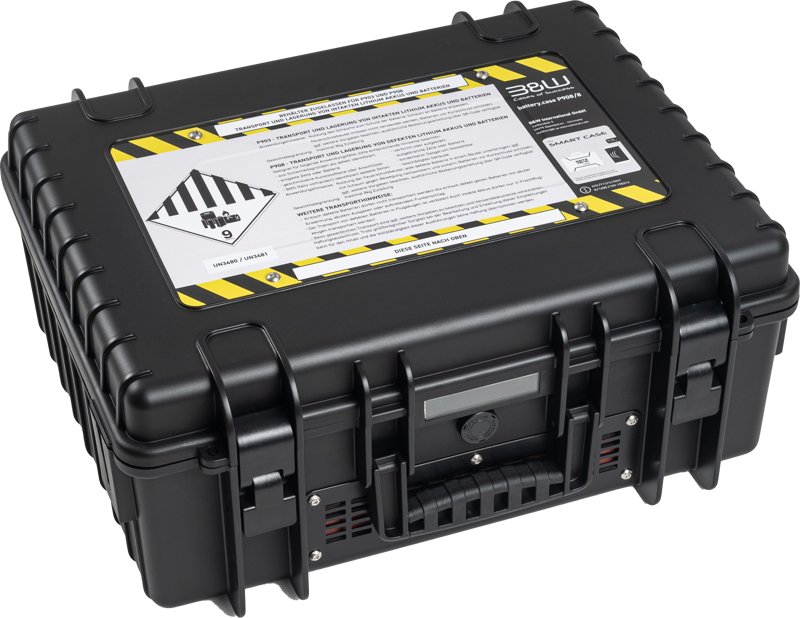
B&W battery.case P908.8 – Approved for transport and storage of intact and defective lithium batteries
The B&W battery.case P908.8 provides certified transport and storage for lithium-ion batteries, including defective units. It meets the transport regulations P903 and P908 and conforms to UN packaging specifications 3480/3481. Use this case when you need a robust, tested container for batteries from devices such as e-bikes, drones or cordless screwdrivers.
Key safety features and test results
- The case has a unique safety system that closes automatically in the event of a fire; this mechanism is registered with the German Patent and Trade Mark Office.
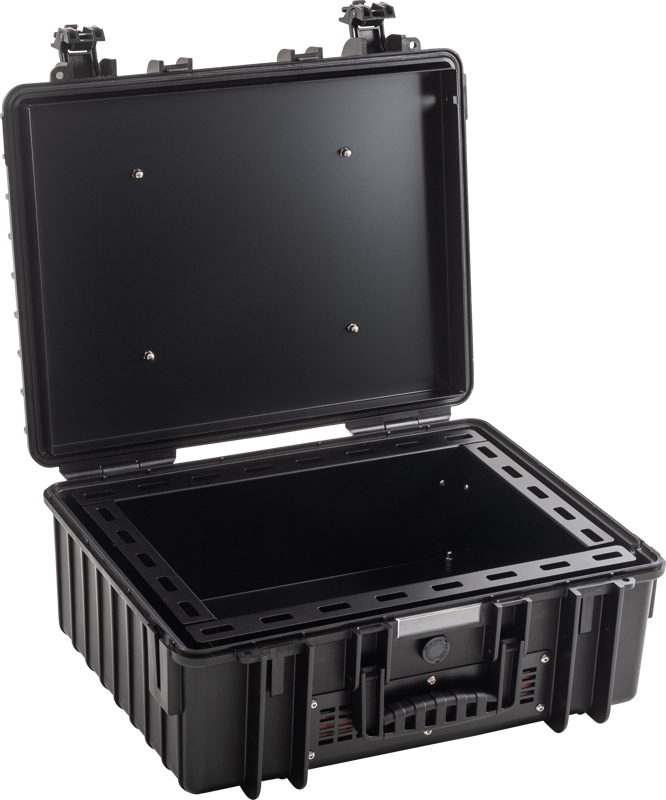
- It combines a high-quality polypropylene plastic outer shell with an internal metal container for improved containment.
- An activated carbon filter reduces escaping gases and significantly cuts soot formation during a battery fire.
- Tested and approved as hazardous goods packaging in accordance with ADR P908, making it suitable for transporting intact and defective lithium batteries on public roads.
- It conforms to strict UN packaging specifications 3480/3481 for lithium battery transport.
- Real-condition tests with burning and exploding bicycle batteries showed no flame escape and the outer shell temperature remained constantly below 100°C.
Recommendations for handling defective lithium batteries (P903 & P908)
Follow the specific application instructions for intact or defective batteries to ensure safe storage and transport. The case supports both standard precautions and measures for defect management.
P903 – Transport and storage of intact lithium batteries and accumulators
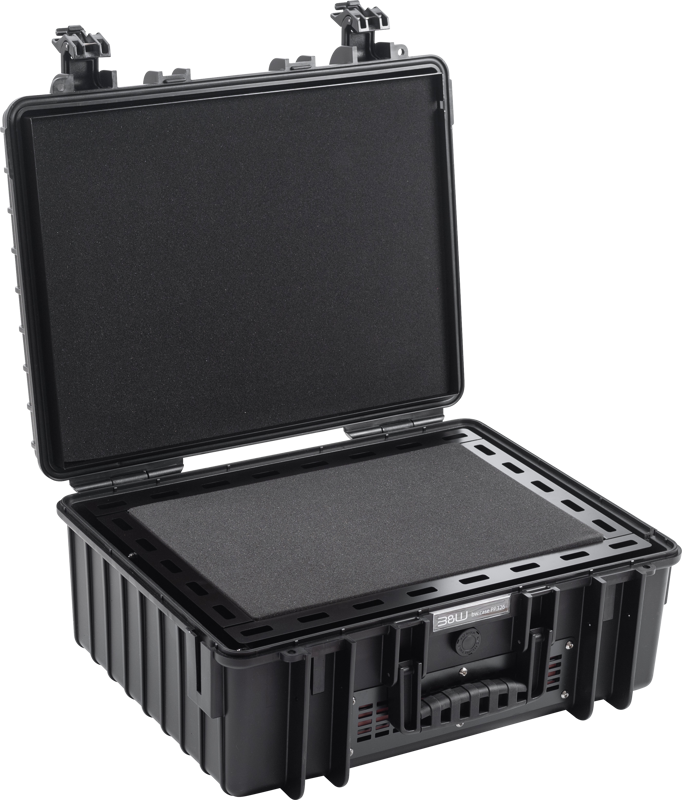
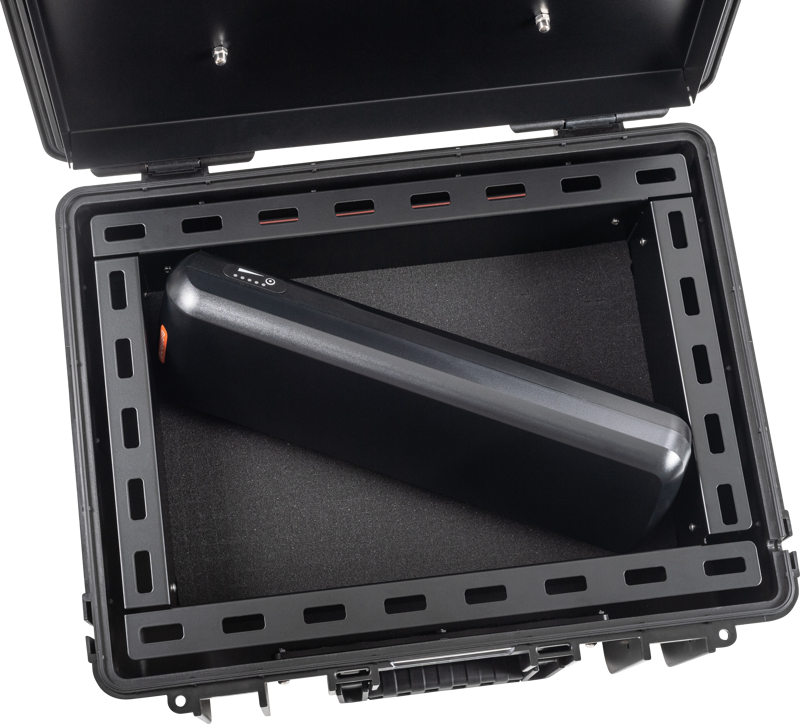
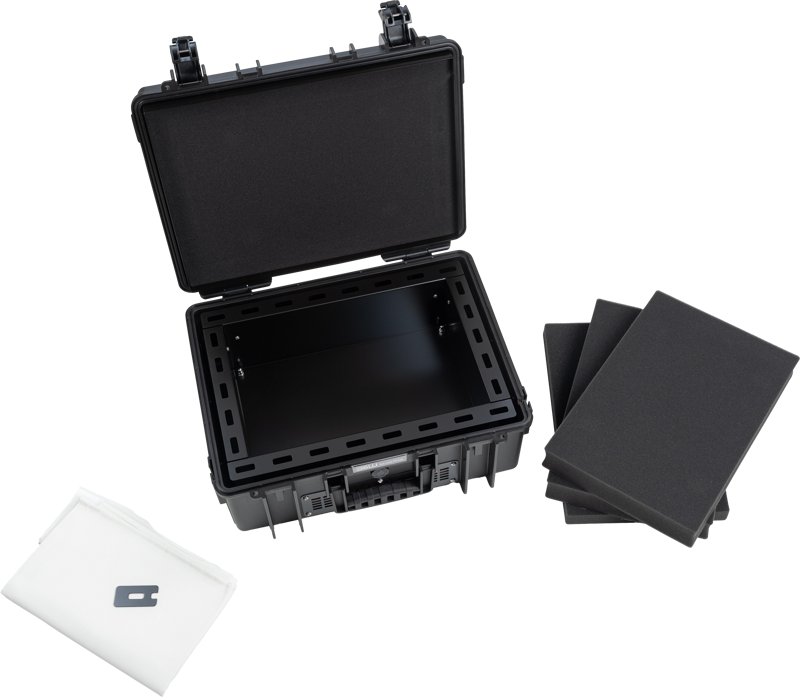
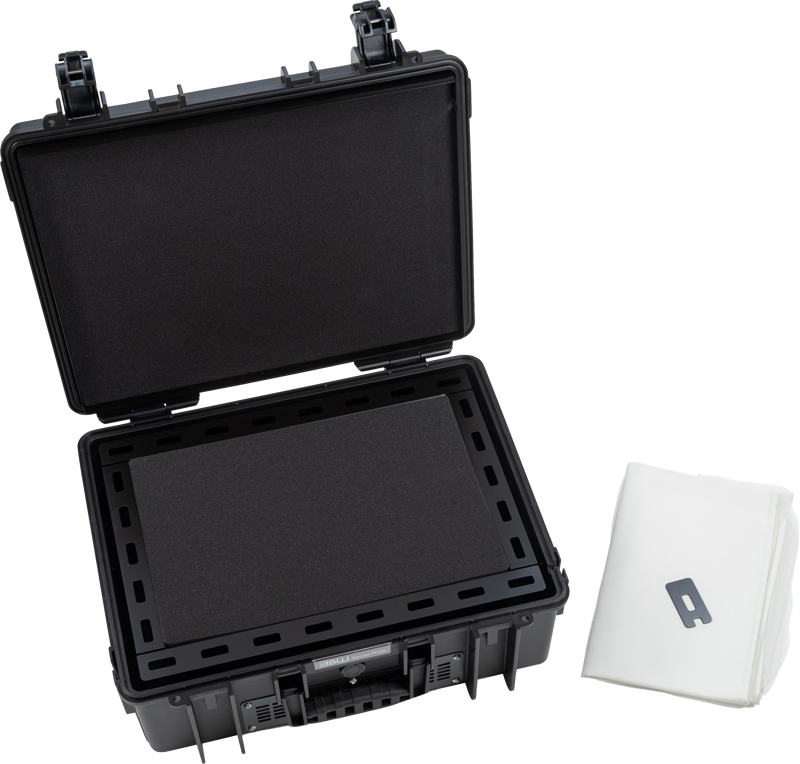
- Use the included pre-punched foam to protect the battery; adapt the foam to the battery shape for a secure fit.
- Fire bags do not have to be used under P903 instructions; however, always protect batteries from short circuits and follow any further specifications or detailed operating instructions if required.
P908 – Transport and storage of defective lithium batteries and accumulators
The P908 approval covers defective batteries that exhibit various failure signs. The following conditions indicate when P908 procedures and this case are appropriate:
- Battery declared defective for safety reasons
- Deformed or inflated battery
- Degassed cell or battery
- Burnt out cell or battery
- Melted plastic parts or connections on the battery
- Strange gas smell detectable
- BMS (if present) identifies defective cells
- Damaged casing
For these situations, the B&W battery.case P908.8 is suitable for safe storage and easier transport of the affected batteries. It is built to be extremely robust and straightforward to use.
Practical features for everyday use
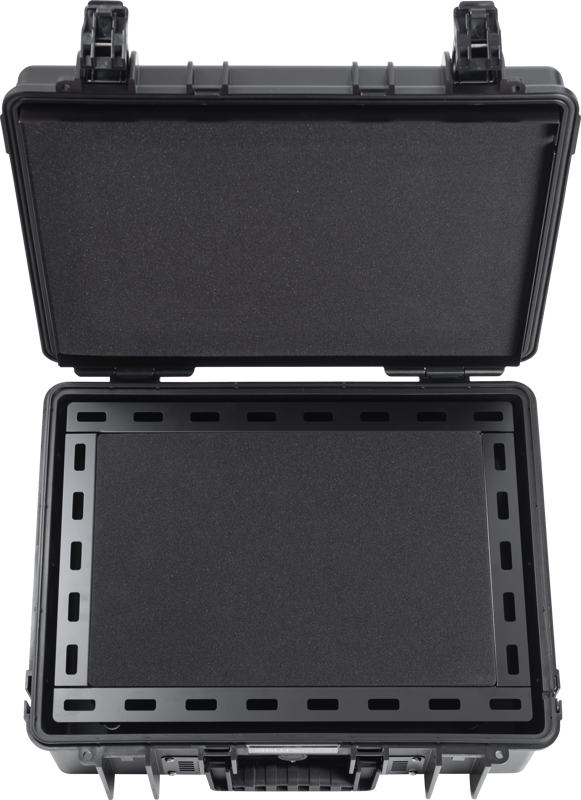
- The pre-punched cube foam can be customised to fit different battery sizes and shapes, ensuring stable and secure hold during transport.
- The available internal loading space measures 388 x 264 x 140 mm, giving room for a variety of battery types within the approved limits.
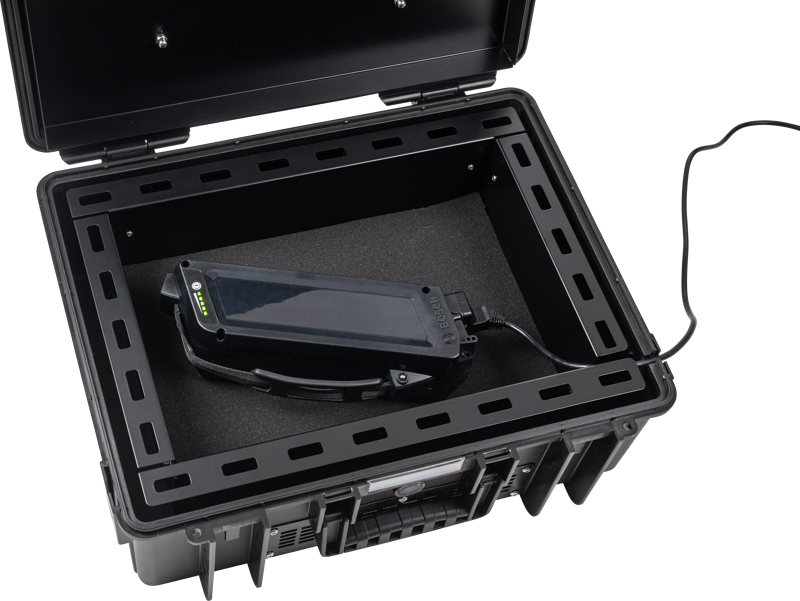
- The case design allows charging a battery safely while the case remains closed, thanks to a sophisticated cable routing system.
- Cables with a maximum permissible diameter of up to 8 mm are retained by a slide-in plate for secure cable routing during charging.
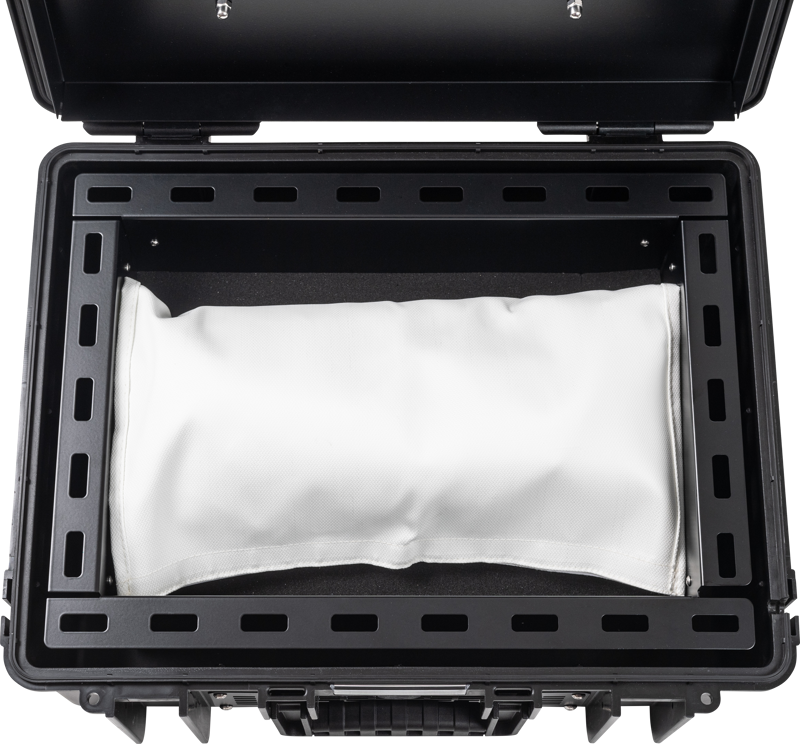
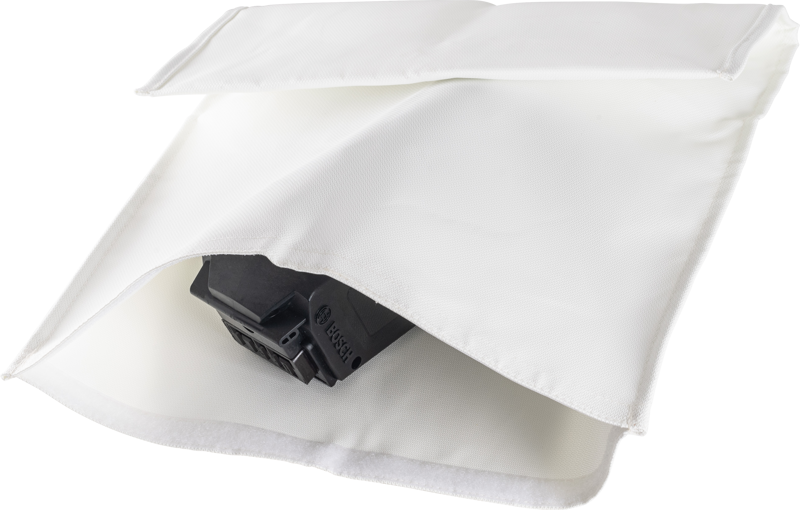
- The package includes one fireproof protective bag (40 x 60 cm) for additional protection of a defective Li-ion battery during storage or charging.
Additional product notes and brand intent
B&W aims to develop customised, reliable and aesthetic products of outstanding quality to meet individual customer requirements. Their cases and bags are designed as practical transport solutions with attention to safety and usability.
Features
- Extremely sturdy case: polypropylene (PP) housing
- Approved for the transport and storage of intact and defective lithium batteries in accordance with transport regulations P903 and P908
- Stackable
- Two eyelets for padlocks (Ø 7 mm)
- Rubberised carrying handle
- Activated carbon filter
- Lockable cable grommet
- Pre-punched cube foam
- Foam lid
- One fireproof protective bag (40 x 60 cm)
| Specification | Value |
|---|---|
| External dimensions | 510 x 420 x 215 mm |
| Loading space | 388 x 264 x 140 mm |
| Weight without shipping packaging | 10.5 kg |
| Maximum payload | 8 kg |
*The contents of the case shown are not included.
FAQ
Question: Is this case officially approved for transporting defective lithium batteries?
Answer: Yes. The B&W battery.case P908.8 is tested and approved as hazardous goods packaging under ADR P908 and is suitable for transporting intact and defective lithium batteries. It also conforms to UN packaging specifications 3480/3481.
Question: Can I charge a battery while it is inside the closed case?
Answer: Yes. The case features a sophisticated cable routing system that allows charging when closed. Cables with up to 8 mm diameter are held securely by the slide-in plate to maintain a safe connection during charging.
Question: What types of battery faults justify using this case under P908 rules?
Answer: Use the case for batteries declared defective for safety reasons, deformed or inflated batteries, degassed or burnt out cells, batteries with melted plastic parts or connections, units with a detectable strange gas smell, cases where the BMS identifies defective cells, or where the casing is damaged.
Question: How does the case contain a battery fire and reduce hazards?
Answer: The case’s automatic closure system engages during a fire, and the internal metal container plus activated carbon filter reduce escaping gases and soot formation. In controlled tests, no flames escaped and the outer shell stayed below 100°C.
Question: Do I need to use additional fire bags when storing intact batteries under P903?
Answer: Under P903 application instructions, fire bags do not have to be used. Instead, use the provided foam to protect and secure the battery, and protect batteries from short circuits. Follow any additional operating instructions when applicable.