
Datavideo DAC-90 3Gbps/HD/SD Analogue Audio de-embedder
- VAT free purchase available at checkout.
- BrandDatavideo
Description
Article no.: 24890
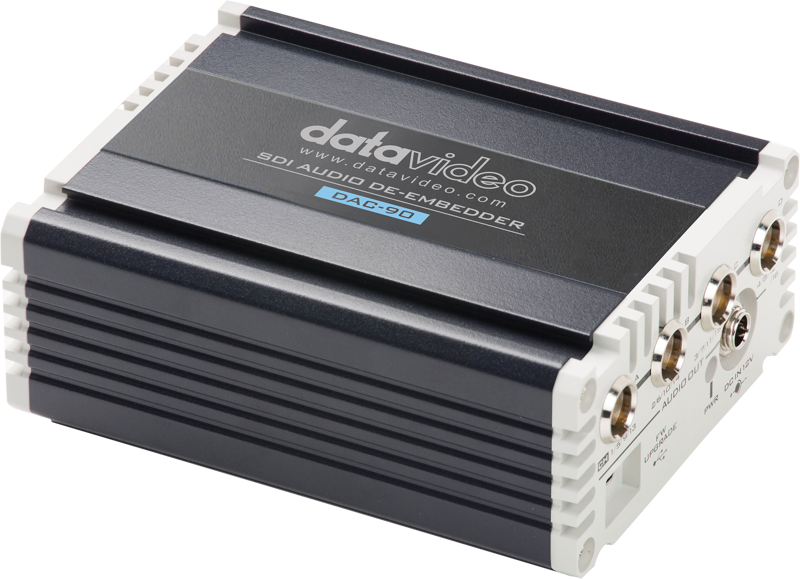
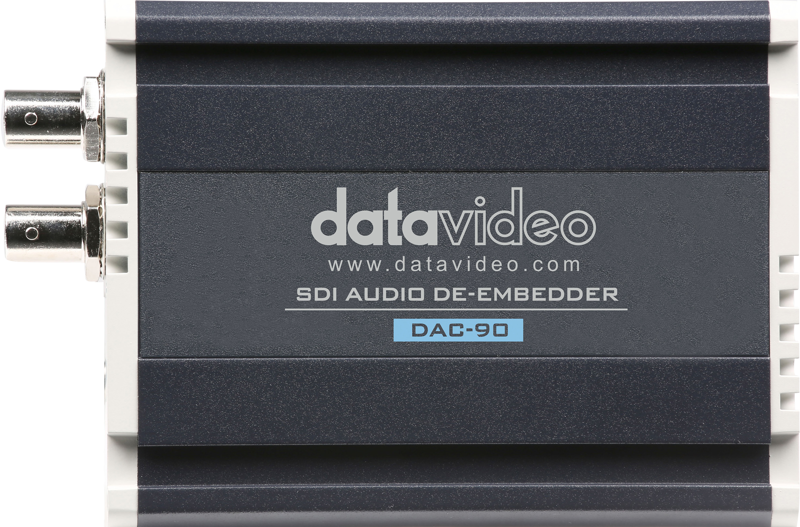
Datavideo DAC-90 3Gbps/HD/SD Analogue Audio De-embedder – De-embeds up to 16 analogue channels with 4 Mini XLR outputs
The Datavideo DAC-90 extracts analogue audio from SDI video so you can route sound to external mixers, recorders or monitors. It accepts SDI input, auto-detects the incoming video format, and supports resolutions up to 1080P 50/60. Use the unit to assign de-embedded audio channels and feed four analogue outputs simultaneously.
Key features and what they mean for you
- De-Embed Audio from SDI Signal: The DAC-90 pulls audio embedded in the SDI stream so you can access separate analogue audio feeds without additional converters.
- Assignable de-embedded audio signal: You can assign which embedded audio channels are routed out of the unit, allowing flexible audio routing from multi-channel SDI sources.
- Auto-detects video format, supports up to 1080P 50/60: The unit recognizes the video format automatically and supports HD and SD signals up to 1080P 50/60.
- De-embeds 16 analogue audio signals (4 at a time): The DAC-90 can access up to 16 analogue channels available in the SDI stream, while outputting four channels simultaneously through its analogue outputs.
- SMPTE and EBU audio level switchable: Choose between SMPTE and EBU level standards to match broadcast or regional workflows.
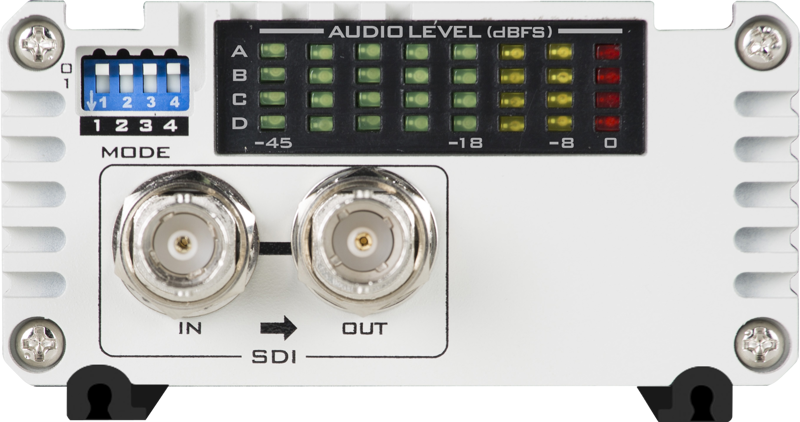
- Control via DIP switches and level indicator display: Configure routing and standards using DIP switches, and monitor levels on the built-in audio indicator display.
- Loop-through SDI output: The SDI loop-through lets you pass the video on to other devices while extracting audio.
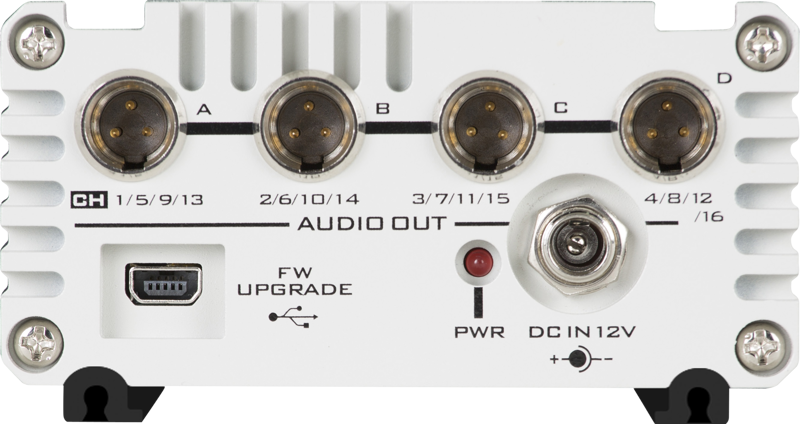
- 4 x Analogue Mini XLR audio outputs: The unit provides four analogue outputs on Mini XLR connectors for direct connection to audio equipment.
- Aluminum alloy and heavy-duty design: The DAC series features a rugged metal housing that withstands demanding environments while providing low heat dissipation for prolonged operation.
Typical use cases
Use the DAC-90 when you need to separate audio from an SDI feed for live production, recording, or monitoring. It suits broadcast, OB vans, live events and any setup that requires converting embedded digital audio to accessible analogue outputs.
Package contents
- 1 x DAC-90 product
- 1 x AD Switch DC 12V
- 2 x Mini XLR to male XLR cable
Specifications
| Specification | Details |
|---|---|
| Product type | SDI Audio De-embedder |
| SDI bandwidth | 3Gbps / HD / SD |
| Supported video formats | Auto-detect, up to 1080P 50/60 |
| Analogue audio channels accessible | Up to 16 (de-embed 4 at a time) |
| Analogue outputs | 4 x Mini XLR |
| Audio level standards | SMPTE and EBU (switchable) |
| Control | DIP switches; audio level indicator display |
| Design | Aluminum alloy, rugged metal housing, low heat dissipation |
| Included power | AD Switch DC 12V |
Frequently asked questions
Question: Which video formats does the DAC-90 support?
Answer: The unit auto-detects the incoming SDI format and supports HD and SD up to 1080P 50/60, so you can connect a range of SDI sources without manual format selection.
Question: How many audio channels can I output at the same time?
Answer: While the DAC-90 can access up to 16 analogue audio channels from the SDI stream, it outputs four analogue channels simultaneously through the Mini XLR connectors, enabling focused routing to your audio gear.
Question: What controls are available for audio routing and levels?
Answer: You configure routing and level standard with DIP switches and monitor the audio using the built-in level indicator display. Additionally, you can switch between SMPTE and EBU levels to match your workflow.
Question: Is the DAC-90 built for field use and long operation?
Answer: Yes. The DAC series uses a rugged aluminum alloy housing designed for demanding conditions and provides low heat dissipation for longer operation in normally ventilated environments.