
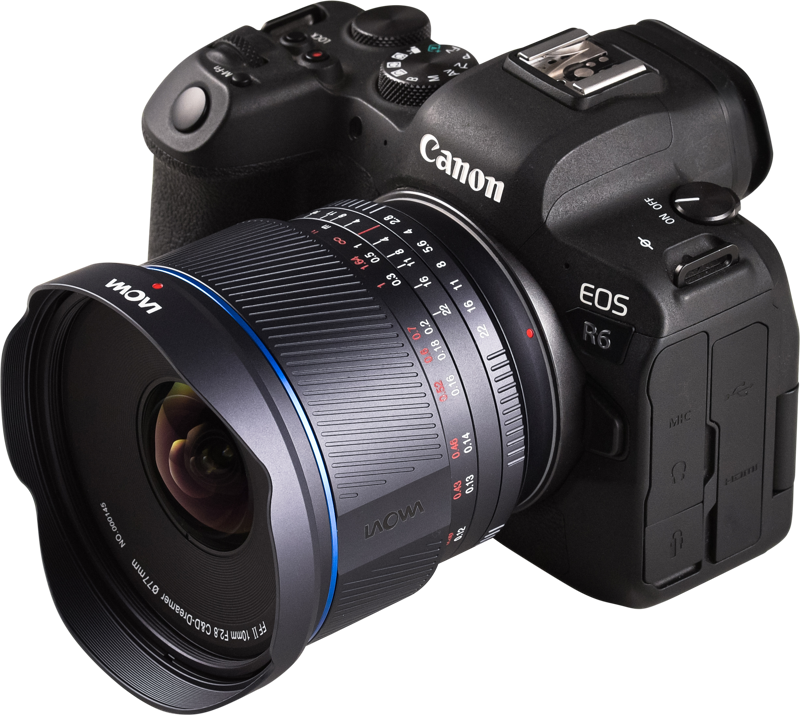
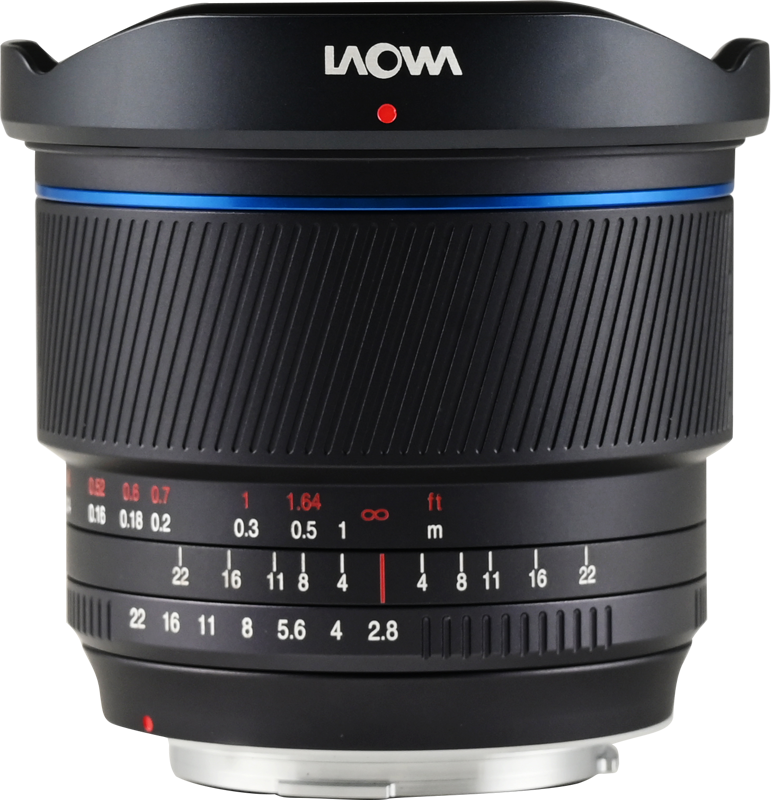
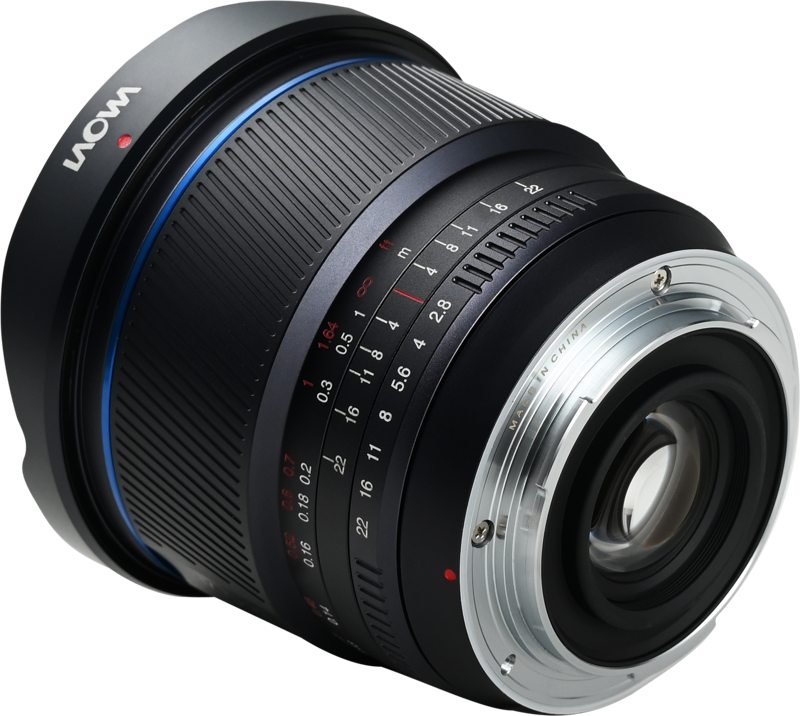
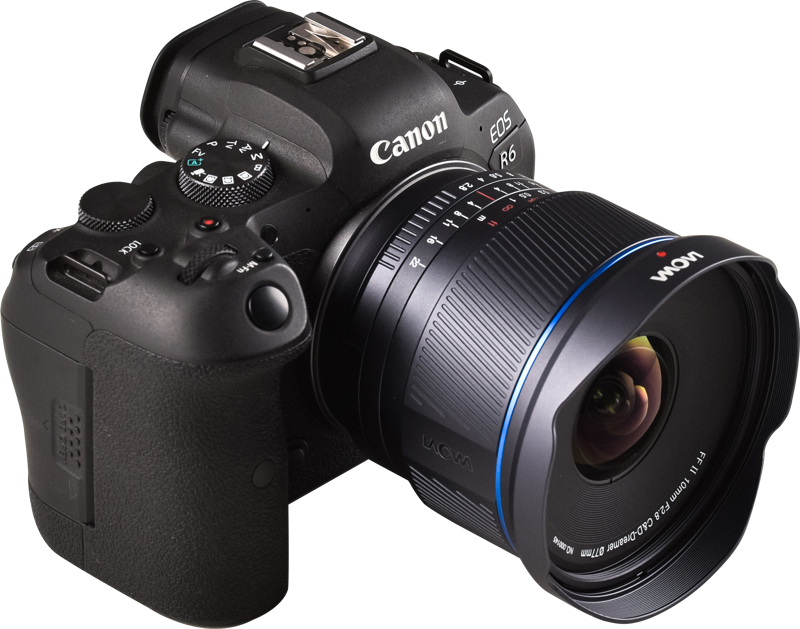
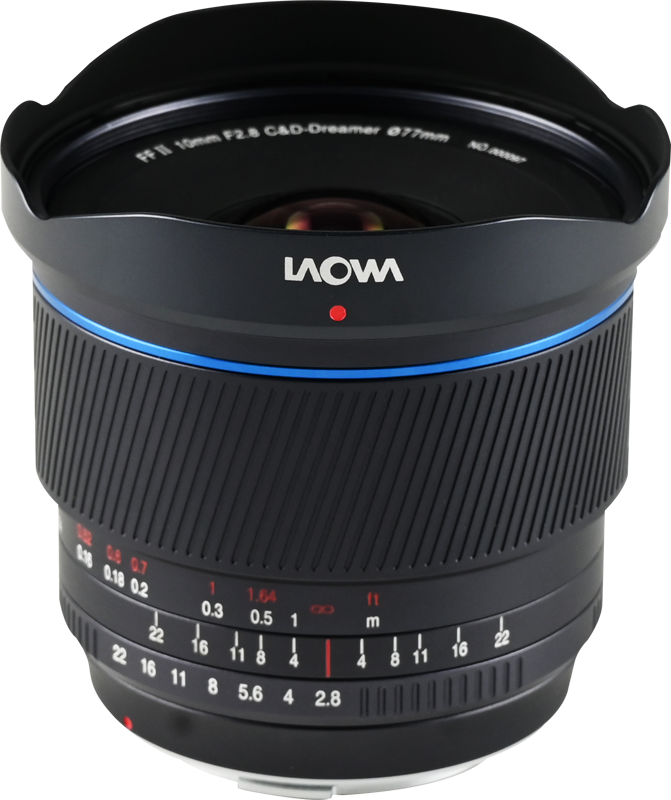
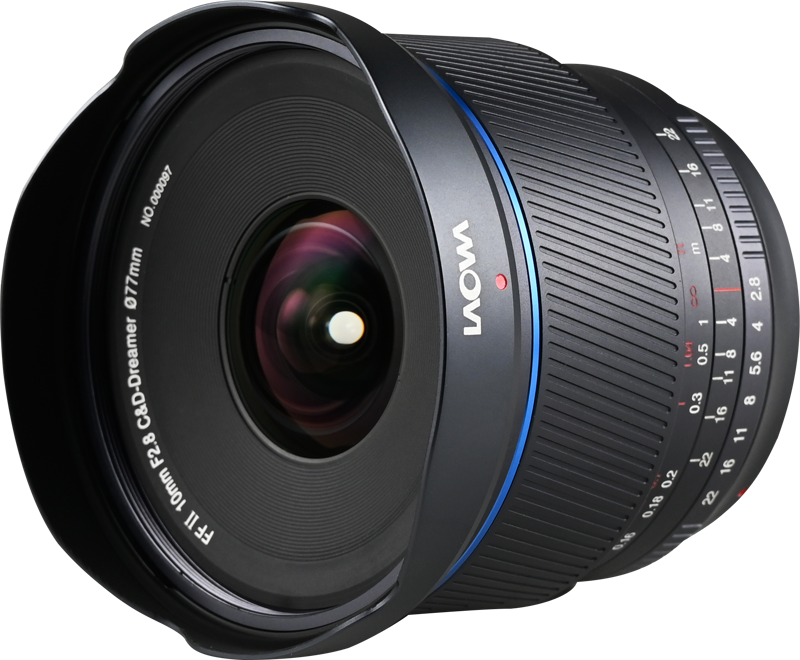
Laowa 10mm f/2.8 Zero-D FF (Manual Focus) - Canon RF
- VAT free purchase available at checkout.
- BrandLaowa
Description
Article no.: 27292
Laowa 10mm f/2.8 Zero-D FF (Manual Focus) – 10mm ultra-wide with Zero-D near-zero distortion (Canon RF)
The Laowa 10mm f/2.8 Zero-D FF Manual Focus is an ultra-wide-angle prime lens designed for full-frame mirrorless cameras. It delivers a very wide field of view while employing Laowa's Zero-D (near-zero distortion) optical design. This makes it suited for shooting scenes where straight lines and minimal distortion matter.
Wide aperture and manual control
The lens offers a bright f/2.8 maximum aperture, which gives photographers greater flexibility in low-light situations such as night photography and astrophotography. Furthermore, the manual focus design provides precise control, allowing you to fine-tune focus for creative compositions and critical shots where autofocus is not required.
Optical performance and construction
The optical design uses high-quality glass elements to reduce chromatic aberration and color fringing. As a result, the lens produces sharp, high-contrast images across the frame, even when used wide open. Additionally, the Zero-D optics minimize distortion, which is particularly valuable for architecture and interior photography where maintaining straight lines is essential.
Portability and coverage
Despite its ultra-wide capabilities, the lens remains compact and lightweight. Therefore, it suits photographers who need high-quality optics in a portable package and who travel or move frequently between locations. The lens provides full-frame coverage and is optimized for mirrorless camera systems.
Key features
- 10mm ultra-wide-angle focal length for expansive compositions and immersive perspectives.
- Bright f/2.8 maximum aperture to support low-light shooting such as night landscapes and astrophotography.
- Zero-D optics for near-zero distortion, ideal for architecture and interior work.
- Manual focus design for precise control and deliberate creative adjustments.
- Advanced optical construction aimed at minimizing chromatic aberration and color fringing for sharp, high-contrast images.
- Compact and lightweight build for easy handling and travel.
- Full-frame coverage optimized for mirrorless camera systems.
- Minimum focusing distance: 18 cm, allowing for close foreground elements in wide-angle compositions.
- Available mounts: Sony E, Nikon Z, Canon RF, Leica L.
Specifications
| Specification | Detail |
|---|---|
| Focal length | 10mm |
| Maximum aperture | f/2.8 |
| Focus type | manual focus |
| Optical characteristic | Zero-D (near-zero distortion) |
| Minimum focusing distance | 18 cm |
| Coverage | Full-frame (optimized for mirrorless) |
| Available mounts | Sony E, Nikon Z, Canon RF, Leica L |
What's in the box
- Laowa 10mm f/2.8 Zero-D FF Manual Focus Lens
- Front and Rear Lens Caps
- Lens Hood
- Protective Lens Pouch
Use cases and practical notes
Use this lens for landscape photography when you want dramatic, sweeping perspectives. For architecture and interiors, the Zero-D design helps keep lines straight and reduces the need for heavy correction in post-production. In astrophotography, the combination of a very wide field of view and f/2.8 aperture helps capture wider sky areas and more stars. Additionally, the short minimum focusing distance (18 cm) lets you include strong foreground elements in close-up wide-angle compositions.
Frequently Asked Questions
-
Question: Is this lens available for Canon RF mount?
Answer: Yes. The Laowa 10mm f/2.8 Zero-D FF Manual Focus is available in Canon RF mount, as well as Sony E, Nikon Z, and Leica L mounts. -
Question: Does this lens have autofocus?
Answer: No. This model is a manual focus lens, designed for precise, hands-on focusing and creative control. -
Question: How does the Zero-D design affect architectural shots?
Answer: The Zero-D optics reduce distortion to near-zero, which helps retain straight lines and accurate perspective in architecture and interior photography, minimizing corrective editing later. -
Question: Is this lens suitable for astrophotography?
Answer: Yes. The ultra-wide 10mm field of view combined with the bright f/2.8 aperture supports night and astro work by capturing wide sky areas and improving low-light performance. -
Question: What accessories are included with the lens?
Answer: The lens ships with front and rear caps, a lens hood, and a protective lens pouch.