
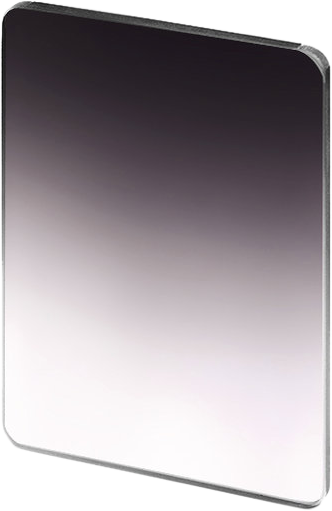
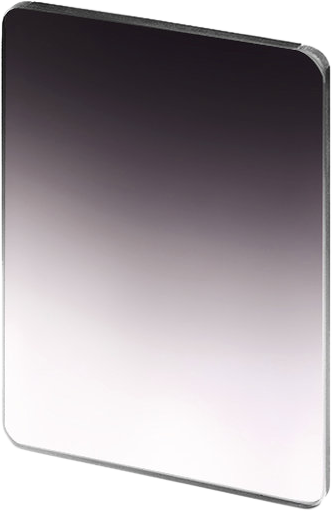
NiSi Cine Filter Nano IR GND V-Soft 4x5.65"""" 0.3
- VAT free purchase available at checkout.
- BrandNiSi
Description
Article no.: 28382
NiSi Cine Filter Nano IR GND V-Soft 4x5.65" 0.3 – Soft-edge vertical graduated ND for controlling bright skies
The NiSi Nano Vertical Soft-Edge Graduated IRND Filter darkens specific parts of the frame, such as bright skies, while leaving other areas at a normal exposure. It is densest at the edge and tapers to clear by the middle, providing a soft-edged line of transition between the dense and clear areas.
How this filter works
This graduated neutral density filter reduces light in the brighter portion of the image without affecting the rest of the scene. Because neutral density filters do not change image coloration, the NiSi Nano Soft-Edge Graduated IRND preserves natural colors while balancing exposure across the frame.
Design optimized for digital sensors
NiSi developed this filter specifically to perform well with digital sensors. Each surface receives one layer of NiSi Optical Nano Coating to provide nearly flat attenuation of both visible and infrared light. As a result, the filter helps prevent color casts and supports cleaner, truer blacks during longer exposures.
Key features
- This NiSi Nano Vertical Soft-Edge Graduated IRND Filter is constructed from optical glass for clarity as well as color fidelity.
- Graduated neutral density filter darkens bright areas of an image, such as skies, while leaving the remainder of the frame unaffected.
- Soft-edged line of transition between the dense and clear areas for smoother blends with foregrounds.
- Filter does not affect coloration of the image and is ideal for use with other filters.
- Each surface includes one layer of NiSi Optical Nano Coating that attenuates infrared light as well as visible wavelengths, to maintain color neutrality and suppress color casts due to increased exposure times.
- Constructed from optical glass for clarity.
- Scratch resistance to help protect the optical surface during regular use.
- Easy to clean for straightforward maintenance in the field or studio.
- This filter is 4mm thick.
- Leatherette pouch included for storage and transport.
Specifications
| Specification | Details |
|---|---|
| Filter model | NiSi Cine Filter Nano IR GND V-Soft |
| Size | 4x5.65" |
| Density | 0.3 |
| Thickness | 4mm |
| Material | Optical glass |
| Coating | NiSi Optical Nano Coating on each surface |
| Edge type | Vertical soft-edge |
| Included accessory | Leatherette pouch |
Practical use cases
Use this filter when you need to darken bright skies while preserving correct exposure in the foreground. Because the transition is soft-edged, it works well with scenes that have uneven horizons or elements that cross the skyline. Additionally, the IR attenuation and neutrality make it suitable for digital imaging where color fidelity matters.
FAQ
Question: Will this filter change my image colors?
Answer: The NiSi Nano Soft-Edge Graduated IRND is designed to be neutral. Its optical glass construction and Nano coating attenuate infrared as well as visible light to minimise color casts, so it does not affect overall coloration.
Question: Can I use other filters with this graduated ND?
Answer: Yes. The filter is described as ideal for use with other filters because it maintains color neutrality and does not introduce noticeable coloration when combined with additional optics.
Question: How does the soft edge behave in practice?
Answer: The filter is densest at the edge and tapers to clear by the middle, producing a soft-edged transition. This gives smoother blends for scenes with irregular horizons or foreground elements that cross the skyline.
Question: What maintenance does the filter require?
Answer: The filter offers scratch resistance and is easy to clean. For storage and transport, a leatherette pouch is included to protect the surface between uses.