
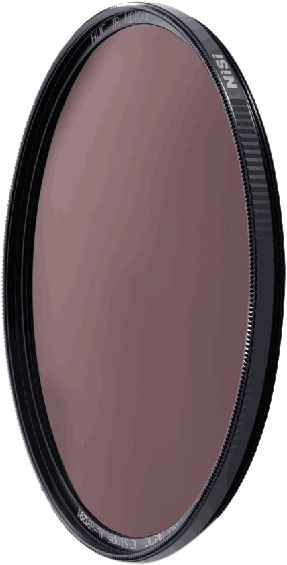
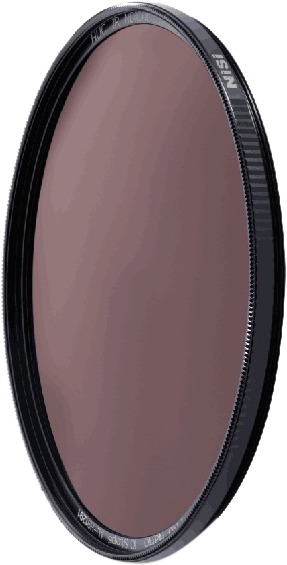
NiSi Filter IRND64 Pro Nano Huc 49mm
- VAT free purchase available at checkout.
- BrandNiSi
Description
Article no.: 28547
NiSi Filter IRND64 Nano Huc 49mm – 6-stop ND for longer exposures and wider apertures
The NiSi Filter IRND64 Nano Huc 49mm reduces incoming light by 6 stops. It suits videographers and landscape photographers who want to use slower shutter speeds or larger apertures than would otherwise be possible. The filter combines neutral density, IR correction and hydrophobic nano coatings in an ultra-thin frame for wide-angle use.
What this 6-stop ND filter does
Attach the NiSi IRND64 Nano Huc to uniformly reduce the amount of light entering your lens. As a result, you can choose a longer shutter speed to create motion blur or a larger aperture to achieve shallower depth of field. In addition, videographers can use the filter to shoot at specific speeds that help produce a natural image rendition.
Key features and benefits
- Reduces exposure by 6 stops — provides significant light reduction for long exposures and large-aperture shooting.
- IR coating — helps eliminate infrared light and avoids color casts that can occur during long exposures.
- Made of optical glass — maintains image sharpness and resolution.
- Nano coating — repels water and grease, making the filter easier to keep clean in the field.
- Matt black, ultra-thin frame (3.5mm) — minimizes the risk of vignetting on super wide-angle lenses.
Use cases
Use this filter for landscape and portrait photography when you want to slow shutter speeds for motion blur or open the aperture for a shallower depth of field. Likewise, videographers can use it to control exposure while maintaining desired frame rates and shutter speeds for a natural-looking motion cadence.
| Specification | Value |
|---|---|
| Model | NiSi Filter IRND64 Nano Huc |
| Light reduction | 6 stops (ND64) |
| Thread size | 49mm |
| Material | Optical glass |
| Frame thickness | 3.5mm |
| Frame finish | Matt black, ultra thin |
| Coatings | Nano coating; IR coating |
Smart FAQ
Question: Will this ND filter change the color of my images?
Answer: The NiSi IRND64 Nano Huc is designed not to affect color rendition. In addition, the IR coating helps eliminate infrared light that can cause color casts during long exposures.
Question: Is this filter suitable for wide-angle lenses?
Answer: Yes. The filter has an ultra-thin, matt black frame of 3.5mm, which reduces the risk of vignetting on super wide-angle lenses.
Question: How does the nano coating help in practical use?
Answer: The nano coating repels water and grease, so the filter stays cleaner longer and is easier to maintain during outdoor shoots.
Question: Who benefits most from using this filter?
Answer: Landscape photographers and videographers will find it particularly useful. Photographers can achieve longer exposures or wider apertures, while videographers can control exposure to maintain natural motion rendition at chosen frame rates.