
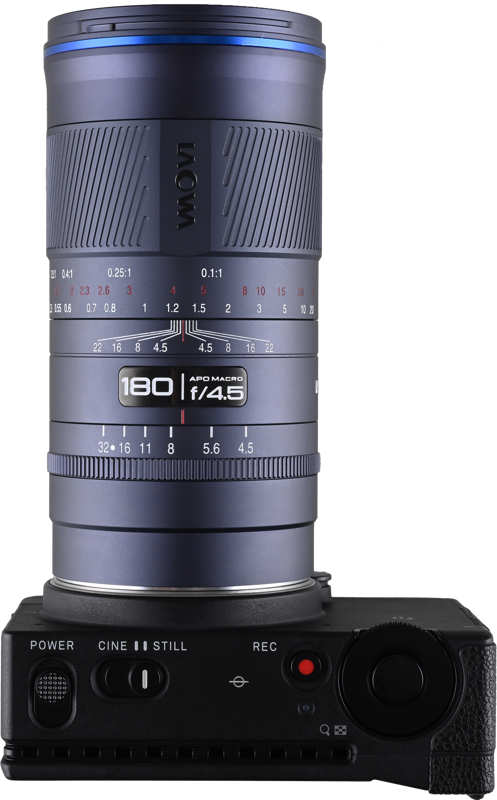
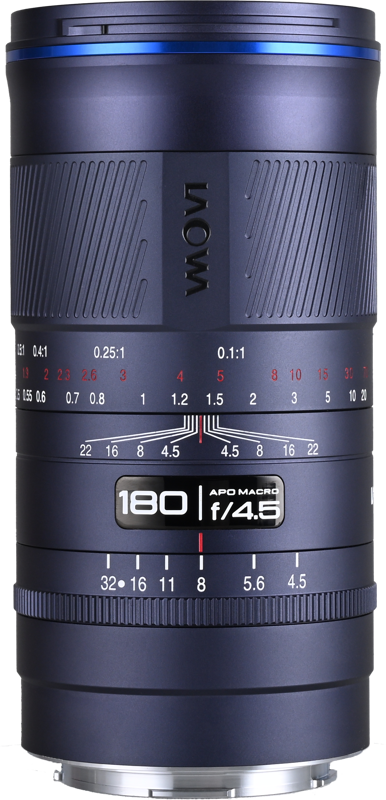
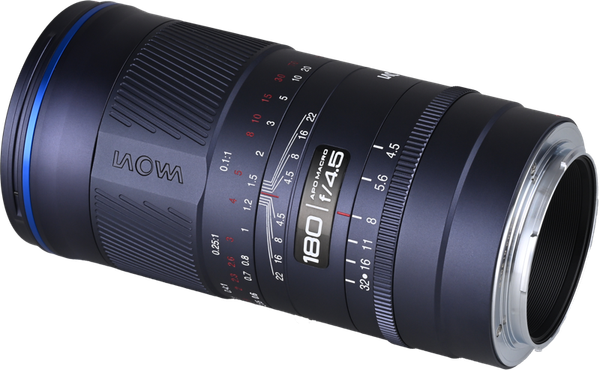
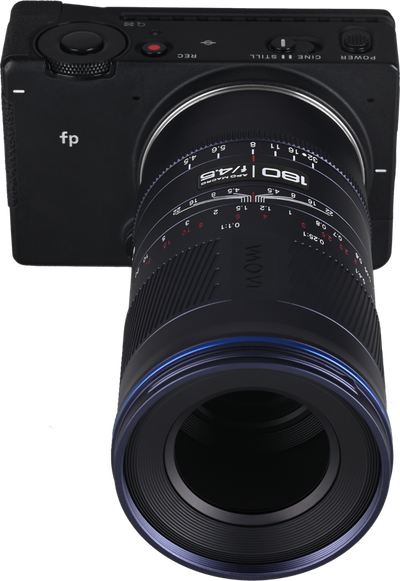
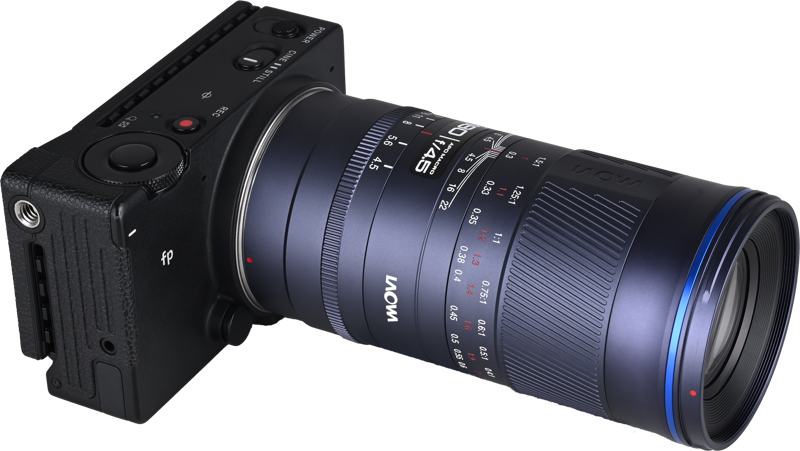
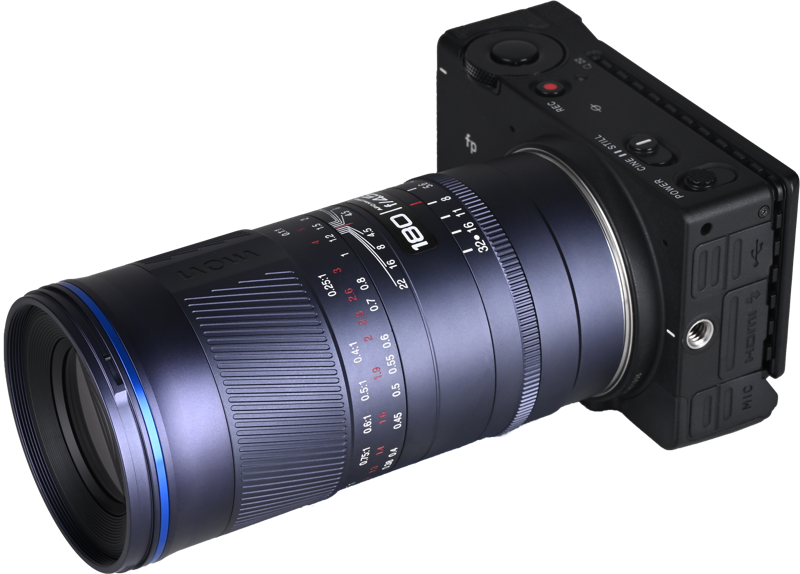
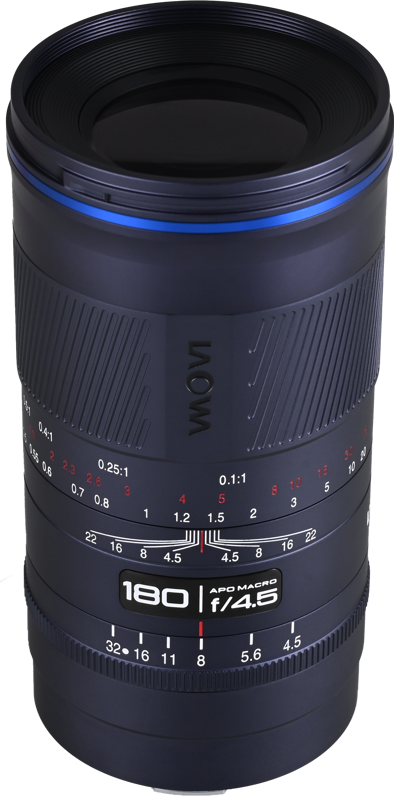
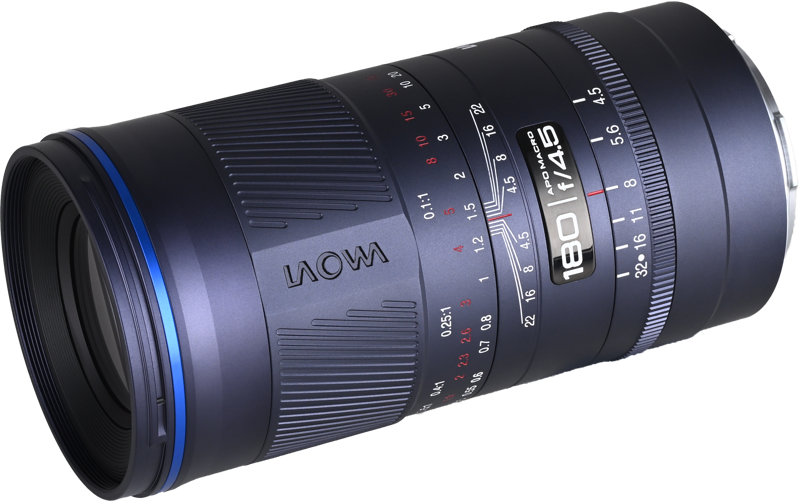
Laowa 180mm f/4.5 1.5x Ultra Macro APO (Manual Focus) L mount
- VAT free purchase available at checkout.
- BrandLaowa
Description
Article no.: 31720
Laowa 180mm f/4.5 1.5X Ultra Macro APO — 180mm tele-macro with 1.5× magnification and generous working distance
The Laowa 180mm f/4.5 1.5X Ultra Macro APO pairs long telephoto reach with high-magnification macro capability in a compact, field-ready design. Its 180mm focal length gives you extra working distance for skittish subjects and product details, while the 1.5:1 magnification lets you reveal micro-texture beyond life-size. The lens targets photographers and filmmakers who need reach, detail, and portability for macro work.
Optical design and image quality
The lens uses an apochromatic (APO) optical design to reduce both longitudinal and lateral chromatic aberrations. As a result, you get cleaner color rendering and crisper detail from the center to the corners of the frame. Laowa’s 9-element/12-group construction further supports consistent sharpness and fine texture rendering that macro shooters require.
Aperture, background and compression
The compact f/4.5 maximum aperture balances sharpness, background separation, and portability. Even when you stop down to increase depth of field, the lens preserves subject isolation thanks to the telephoto 180mm focal length, which also provides strong compression for pleasing background rendering.
Magnification, focusing and working distance
- 1.5× macro magnification: captures details beyond life-size for micro subjects and fine textures.
- Minimum focusing distance 30 cm: enables close-up framing while keeping the lens at a practical distance from the subject.
- Working distance 147.6 mm: gives room for lighting, accessories, and subject safety when shooting insects or nervous subjects.
Autofocus and mount support
The lens supports autofocus on specific mounts under certain conditions. It offers AF support for Sony E, Nikon Z, and Canon EF from 1.5 m to infinity. To enable autofocus, rotate the focus ring to the infinity mark (referenced in the manual, page 11). In addition, an EF-to-RF adapter enables autofocus when used on Canon RF bodies.
Build, handling and controls
The lens features a durable housing with a function button, electronic contacts (E/Z/EF), and a USB-C port for updates or service. Its compact and lightweight construction makes it practical for travel and field work: approximately 484 g for the Canon EF version and approximately 522 g for the Sony E version.
Coverage, aperture blades and filters
The Laowa 180mm delivers full-frame coverage with a narrow 13.7° angle of view, supporting strong background compression. It uses a 9-blade diaphragm for rendering out-of-focus highlights and accepts Ø62 mm front filters for additional creative control.
Key features
- 1.5× macro magnification for extra detail beyond life-size
- Minimum focusing distance 30 cm; working distance 147.6 mm for comfortable lighting and framing
- APO design minimizes color fringing in focus and out of focus
- 9-element, 12-group optical construction for consistent sharpness
- Compact and lightweight: approx. 484 g (Canon EF) / 522 g (Sony E)
- Autofocus support for Sony E, Nikon Z, and Canon EF from 1.5 m to infinity; activate AF by rotating the focus ring to the infinity mark (page 11). EF-to-RF adapter enables AF on Canon RF bodies
- Full-frame coverage with a narrow 13.7° angle of view for strong compression
- 9-blade diaphragm and Ø62 mm front filter thread
- Durable housing with function button, electronic contacts (E/Z/EF), and USB-C port
- Dimensions: EF Ø67.6 × 88.4 mm; E-mount Ø67.6 × 134.4 mm
Who this lens is for
Use this lens when you need distance from delicate subjects, such as insects, or when shooting product textures and field macro with controlled lighting. The telephoto reach provides working space for lights and modifiers, while the 1.5× ratio reveals micro-details that shorter macro lenses can miss. Its travel-friendly size makes it practical to carry on location.
What’s in the box
- Laowa 180mm f/4.5 1.5X Ultra Macro APO lens
- Front and rear lens caps
Technical specifications
| Specification | Detail |
|---|---|
| Focal length | 180 mm |
| Maximum aperture | f/4.5 |
| Maximum magnification | 1.5× (1.5:1) |
| Minimum focusing distance | 30 cm |
| Working distance | 147.6 mm |
| Optical construction | 9 elements / 12 groups |
| Diaphragm | 9 blades |
| Filter thread | Ø62 mm |
| Full-frame coverage | Yes; 13.7° angle of view |
| Weight | Approx. 484 g (Canon EF) / 522 g (Sony E) |
| Dimensions | EF Ø67.6 × 88.4 mm; E-mount Ø67.6 × 134.4 mm |
| Other | APO design; function button; electronic contacts (E/Z/EF); USB-C port |
FAQ
Question: Is the Laowa 180mm macro suitable for shooting insects in the field?
Answer: Yes. The 180mm focal length and 147.6 mm working distance provide enough space to approach insects without disturbing them, while the 1.5× magnification captures micro-details that shorter lenses may miss.
Question: Will autofocus work on my camera?
Answer: Autofocus is supported on Sony E, Nikon Z, and Canon EF mounts from 1.5 m to infinity. To enable AF, rotate the focus ring to the infinity mark (see manual, page 11). Additionally, using an EF-to-RF adapter enables AF on Canon RF bodies.
Question: Does this lens cover full-frame sensors and what is the filter size?
Answer: The lens provides full-frame coverage with a 13.7° angle of view. The front filter thread accepts Ø62 mm filters, allowing for neutral density or protective filters as needed.
Question: What physical controls and connections does the lens have?
Answer: The lens features a durable housing with a function button, electronic contacts (E/Z/EF) for communication with compatible bodies, and a USB-C port for updates or service.
If you need additional details about mount-specific behavior or the manual’s AF instructions (referenced as page 11), please contact us and we will source the exact information or provide compatibility guidance for your camera body.